Mira's dancer's terracotta statue

Mira's dancer's terracotta statue

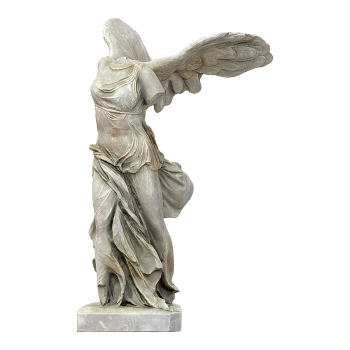
It is a red clay statue from ancient Greece, currently housed in the Louvre Museum in Paris. Created by Athenian potters around 350 BC. It depicts a dancer dressed in a transparent robe, whose theme shares similarities with statues created by other studios in the Hellenistic world at that time (330-31 BC). Early sculptures of this kind were sometimes believed to depict Nymphs (related to the god Pan), but they were also considered mortal, meaning future brides who participated in the sacred wedding dance.
Sleeping Tagra Girl Sculpture

Sleeping Tagra Girl Sculpture

It is a replica of an ancient Greek style terracotta statue, originally created by an ancient Greek artist between the late 5th century BC and the 3rd century BC, and now housed in the Louvre Museum in Paris, France. These statues are known for their naturalistic features, preserved pigments, diversity, and charm, and are commonly referred to as Tanagra statues, named after the large number of such statues discovered in the ancient city of Tagra in the state of Viotia in central Greece. Most of them depict fashionable women or girls elegantly wrapped in sheer cloaks, sometimes wearing wide brimmed hats, holding flower garlands or fans.
White Bone Top Chicken Bronze Statue

White Bone Top Chicken Bronze Statue

Foulque is a replica of a bronze sculpture, the original of which is housed in the Fine Arts Museum in Dijon, France. This replica was made of resin material by Rmn-P (Louvre and Osay Museum Picture Agency) and belongs to the studio of the art museum. The dimensions of this artwork are a height of 27 centimeters, a width of 18.5 centimeters, and a depth of 9.5 centimeters.
Statue of Japanese Daozu God

Statue of Japanese Daozu God

A traditional symbol of faith on the Izu Peninsula in Shizuoka Prefecture, Japan. Daozu gods are deities who protect roads and travelers. In Japanese culture, they are often placed on both sides of roads, especially at intersections in mountainous areas, to bless the safety of passing pedestrians. These stone statues usually appear in pairs, with ancient and rustic images, reflecting the characteristics of Japanese folk art. Known for its long history and unique style. Not only is it an object of local faith, but it has also become a tourist attraction that attracts visitors. Often using rounded carving techniques, it showcases a primitive and mysterious charm, reflecting the ancient Japanese reverence for nature and gods.
The Seahorse and Eagle Statue in Baltimore, USA

The Seahorse and Eagle Statue in Baltimore, USA

The sculpture located in Baltimore, Maryland, USA, was designed by Edmond Romulus Amateis and built in 1927. This artwork is not only appreciated for its exquisite design and historical value, but also symbolizes strength and elegance. Seahorses represent the mystery and diversity of the ocean, while eagles symbolize strength and freedom. The combination of two animals creates a unique visual effect in art, showcasing the harmonious coexistence between different organisms in nature. This sculpture is not only a representation of animal forms, but also a profound reflection on the relationship between humans and nature.
Brass statue of a poor nun priest

Brass statue of a poor nun priest

The Sisters of Poverty is a Catholic women's religious group founded by Luigi Maria Palazzolo in Bergamo, Italy in the 19th century. Established due to Father Palazzolo's education and care for impoverished individuals, especially impoverished women. Committed to creating shelters and educational institutions to help marginalized groups obtain better living conditions and educational opportunities. Members follow the teachings of the priest and are committed to serving the poorest and most socially abandoned people, including orphans, homeless, sick, elderly, and other individuals in need.
Chinese Song Dynasty Wooden Carving of Water Moon Guanyin Statue

Chinese Song Dynasty Wooden Carving of Water Moon Guanyin Statue

Shuiyue Guanyin, also known as the "Bent Leg Guanyin", is a non-traditional expression of Guanyin Bodhisattva. This image of Guanyin Bodhisattva involves lifting one foot and sitting cross legged, presenting a more casual and relaxed posture. Unlike the traditional solemn and dignified image of Guanyin, the crossed legged Water Moon Guanyin conveys a more intimate and unrestrained atmosphere, reflecting the infinite compassion and tolerance of Guanyin Bodhisattva towards sentient beings in Buddhism. This form of manifestation of Guanyin Bodhisattva is usually depicted as sitting or floating on the surface of water, often accompanied by bright moonlight in the background, symbolizing wisdom and purity.
Saint Joan of Arc marble statue

Saint Joan of Arc marble statue

Joan of Arc, also known as the Maiden of Orleans, was a famous military leader and national hero in French history. Born in 1412 in East Remi, France, she claimed to have received divine revelation from a young age, demanding that she lead the French army to resist the occupation of England. During the Centennial War in the middle of the 15th century, Joan of Arc successfully lifted the siege of Orleans by England in 1429. This victory greatly encouraged the French people and helped French Crown Prince Charles VII to be crowned king. Unfortunately, Joan of Arc was captured by the English in 1430 and burned at the stake in 1431 on charges of heresy and witchcraft.
German sculptor Heinz Mack's work 'The Sandburg Builder'

German sculptor Heinz Mack's work 'The Sandburg Builder'

The Sandcastle Builders, a work by German sculptor Heinz Mack. The sculpture depicts a scene of a group of children building sandcastles on the beach. The sculpture showcases the lively postures and focused expressions of the children. They use tools such as buckets and shovels to busily shape sandcastles on the beach. Each child has their own role and actions, creating a vivid and realistic scene. It showcases the creativity, collaborative spirit, and joy demonstrated by children in games. Represents the joy and carefree feeling of childhood.
Uma Maheshwara Limestone Indian Sculpture

Uma Maheshwara Limestone Indian Sculpture

Uma Mahshvara is a form in Hindu Buddhism that represents the divine couple, Maheshvara and Uma. This image symbolizes the union of male and female aspects of the universe, representing the unity of all things.
Saint George Dragon Slayer Statue

Saint George Dragon Slayer Statue

Saint George is one of the most respected and widely worshipped figures among Christian saints. It is said that Saint George was a Roman military officer who lived in the 3rd century. He was persecuted for bravely promoting the Christian faith and refusing to worship gods in Roman temples. He was arrested and tortured, but he persisted in his faith. In the end, he was beheaded and martyred in public. He is revered as a savior, warrior, and protector god. The image of Saint George is often depicted as a warrior riding on a white horse, wielding a spear, and fighting against an evil dragon. This depiction symbolizes his bravery and strength, as well as his victory over evil.
Renneisance Church Angel Statue

Renneisance Church Angel Statue
The angel statues in churches during the Renaissance period are a type of artwork with unique aesthetic and religious significance. These angel statues often appear in art works such as murals, sculptures, and stained glass in European churches. Known for its elegant and refined image. They are usually presented in the form of beautiful women or children, showcasing the purity and elegance of angels through soft lines and intricate carvings. The angel statues in churches usually symbolize religious beliefs and the spiritual world. They showcase the purity and elegance of angels with exquisite images and exquisite craftsmanship, while playing an important religious role in churches, bringing comfort to people's religious beliefs and spirits
Pavlov Monument

Pavlov Monument

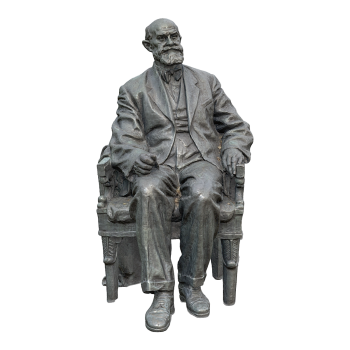
The Pavlov Monument is located in St. Petersburg, Russia and was built to commemorate the great Russian physiologist Ivan Pavlov. A pioneering physiologist and psychologist whose research has had a significant impact on understanding the development of conditioned reflexes and behavioral psychology. He proposed Pavlov's law through experimental research on dogs, which states the relationship between conditioned stimuli and conditioned reflexes. It is one of the iconic attractions of St. Petersburg, symbolizing the brilliant achievements of Russian science and Pavlov's important position in the field of physiology.
Ancient Maya Ruins Statues

Ancient Maya Ruins Statues

Maya ruins refer to the sites and buildings left by the Maya civilization located in Central America. The Maya civilization is one of the most glorious civilizations in ancient America, with its prosperity period approximately between 250 and 900 AD. One of the characteristics of Maya ruins is their magnificent architecture and exquisite carving art. The buildings in the ruins include pyramids, temples, palaces, and sports fields. These buildings are usually constructed of stone, using precise geometric design and complex decorations. The Mayans also carved rich reliefs and murals on buildings, depicting their religion, history, and daily life. These relics are important for us to understand the history of the Maya civilization.
The Renaissance statue at the French monument in Paris

The Renaissance statue at the French monument in Paris

This monument once represented Saint Joan of Arc, but later changed and was named after the French monument Renaissance, located at the top of Ileaux Cygnes next to the Pont Bir Hakeim bridge in Paris. Although this equestrian statue in Paris was originally created by Danish artist Holger Wedekinch in 1930 to represent Joan of Arc, the statue you see today was cast in Malakov in 1948 and donated to the city of Paris.
Brass statue of Guan Yu riding on horseback

Brass statue of Guan Yu riding on horseback

Guan Yu (160-219 AD), also known as Yunchang, was an important general and historical figure of Shu Han during the Three Kingdoms period in China. He is a trusted aide and deputy general of Liu Bei, as well as a legendary figure in Liu Bei's clothing token "Scratching Bones for Healing". Standing at seven feet and five inches in length, with a beautiful and majestic beard, and high martial arts skills. He made significant military achievements for Liu Bei in the Battle of Red Cliffs and was awarded the title of "Marquis of Wu", becoming an important assistant and protector of Liu Bei. He is known for his loyalty and bravery, and is revered as the "Martial Saint" by people. Known as' Guan Gong 'by later generations and widely worshipped. The spirit and story of Guan Yu are widely praised in Chinese culture and have become legendary figures in history.
Adolf Sachs Statue

Adolf Sachs Statue

The Adolph Sax statue is a commemorative sculpture located in Lier, Belgium, in honor of the famous Belgian instrument maker Adolph Sax. He was a 19th-century instrument maker and inventor who invented the saxophone, a wind instrument with unique timbre and expressiveness. The saxophone is widely used in modern music and has become an indispensable instrument in music genres such as jazz and pop. This statue showcases Adolf Sacks' significant contributions to the music industry, promoting his creative spirit and the value of musical art.
Golden lion statues from the 11th and 12th centuries

Golden lion statues from the 11th and 12th centuries

This rare and mysterious lion golden sculpture is a symbol of power and authority, carefully decorated with circular filaments and fine grains, consistent with the Islamic goldsmith tradition of later Muslim kingdoms in the Iberian Peninsula (now Spain and Portugal). Islam was introduced to Europe in 711 AD, bringing new traditions to decorative arts. Although the handle, spout, and open mouth of this lion statue conform to the form of a sea lizard, its small size may imply more symbolism than functionality. The artwork that is closest in size, style, and craftsmanship to this lion is a winged ram discovered in northwest Spain.
Lion sculpture in Kitt Lake (Burgenland) Castle Park
Lion sculpture in Kitt Lake (Burgenland) Castle Park

The lion sculpture in the Castle Park of Lake Kitt (Burgenland) is a scenic spot located near Lake Kitt in Austria. This sculpture is a pair of lifelike lions, exquisitely crafted and lifelike. They are placed at the entrance of the castle park, showcasing the power and majesty of male lions to visitors. It is a part of the region's long-standing architectural heritage, symbolizing power and protection. They carry the traditions and stories of the past, providing visitors with an immersive cultural experience. Not only does it showcase the power and majesty of the male lion, but it also provides a beautiful park environment for visitors to relax and fully appreciate the beauty of nature.
Kyiv Founders Monument Kiev Founders Monument

Kyiv Founders Monument Kiev Founders Monument

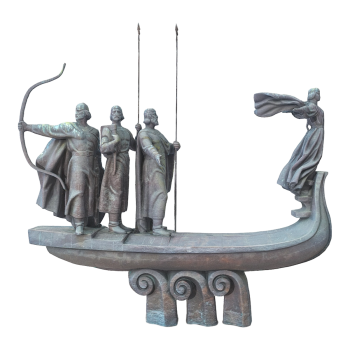
The Kyiv Founders Monument is an iconic monument in Kiev, the capital of Ukraine, commemorating the founders of Kiev. This monument is located on Mount Vladimir in the historical center of Kiev and was completed in 1982. It was designed by sculptor Andrei Moldaski, and the overall shape is solemn and spectacular. The monument consists of three huge sculptures: Kieran, the founder of Kiev, his brother Yuri, and their sister Skara. It showcases the history and cultural heritage of Kiev and has become an important landmark and tourist attraction in the capital of Ukraine.
Johann Strau ß Monument to Johann Strauss

Johann Strau ß Monument to Johann Strauss

The Johann Strauss Memorial is a monument located in the center of Vienna, Austria, to commemorate the famous Austrian composer and conductor Johann Strauss. This monument is one of the symbols of Vienna's music culture. He was one of the most famous composers in 19th century Austria, known for his beautiful melodies and cheerful rhythms in his music works. Strauss's works cover various musical styles, among which the most famous is his waltz, known as the "king of waltzes". His music represents the Austrian music of the Romantic period and has had a profound impact on the development of Viennese music.
Bronze Statue of a Boxer at the National Museum of Rome

Bronze Statue of a Boxer at the National Museum of Rome

The statue depicts a boxer sitting down and resting for a moment in the midst of a fierce boxing match. He is an elderly boxer who has been through boxing matches for a long time. His image appears tired, and from his movements and expressions, he seems to lack confidence in whether he can win. However, he still shows great concern for the game. He exposes his solid muscles all over his body, although he is strong, he has a strong sense of not following his heart. Sculptor Apollonius displayed a high degree of realism in this work, with the human body's movements and bulging muscles conforming to the anatomy of the human body. Not only is the external form realistic, but the internal mental state is also extremely vivid, full of humanity and life.
The Bamboo Root Carving Arhat, a Lucky Lion, was created by Liang Fengzhu
The Bamboo Root Carving Arhat, a Lucky Lion, was created by Liang Fengzhu

Ruishi Luohan Bamboo Root Carving, a 1999 work by Liang Fengzhu, a master of Chinese arts and crafts. It is currently collected in the Liangfengzhu Arts and Crafts Museum in Nanyue, Hengyang, China, with a height of 21 cm and a width of 23.2 cm
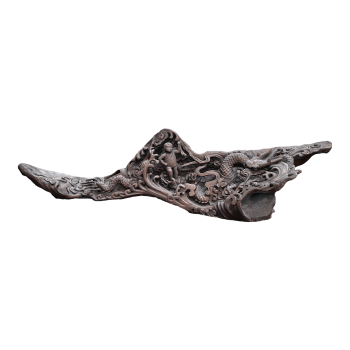
Nezha's Chaos in the Sea "created by Liang Fengzhu

Nezha's Chaos in the Sea "created by Liang Fengzhu

The gloomy wood carving, made by Chinese master of arts and crafts Liang Fengzhu in 2001, is now collected at the Liang Fengzhu Arts and Crafts Museum in Nanyue, Hengyang, China. Nezha is a protector deity in Chinese folk religion. His official Taoist name is' Marshal of the Middle Altar '. After he became a deity, he was bestowed with the title of "Third Lotus Prince".